Data Driven Decisions
What Should You Do When Website Traffic Starts Falling?
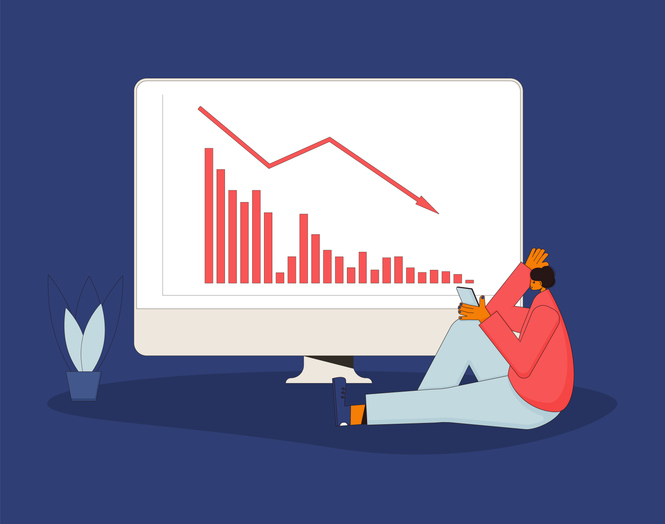
When website traffic starts falling, most business owners panic.
The immediate reaction is often to assume that something has broken, that Google has penalised the website or that competitors have somehow overtaken the market overnight. Whilst these scenarios are possible, they are rarely the first place you should look. The reality is that website traffic can decline for many different reasons, and the businesses that recover fastest are the ones that follow a structured process rather than jumping to conclusions.
The first thing you should do is log into Insight Owl and review your Website Traffic and Traffic Sources reports. Understanding exactly where the decline is happening will determine every decision that follows. Once you know which traffic source is falling, you can begin investigating the underlying cause and build an action plan to reverse the trend.
How Do You Identify Which Traffic Source Is Falling?
Before attempting to fix a traffic problem, you must first establish where the problem exists.
Many businesses look only at total website traffic, but that headline figure rarely tells the whole story. Traffic can come from a wide range of sources, including Organic Search, Direct Traffic, Social Media, Referral Traffic, Paid Search and Email Marketing. A decline in one source may be completely offset by growth in another.
Over the last 12 months, many businesses have experienced significant reductions in organic search traffic. This is largely due to changing search behaviour as consumers increasingly use large language models such as ChatGPT, Gemini, Claude and Perplexity to research information. In many cases, users are receiving answers directly from AI platforms rather than clicking through to websites.
This is why understanding the source of the decline is the first and most important step.
Insight Owl makes this easy by bringing all of your acquisition data into a single dashboard, allowing you to quickly see where traffic is increasing, where it is falling and how those trends have changed over time.
How Do You Confirm That The Traffic Drop Is Real?
Once you have identified the source of the decline, the next step is to verify that the reduction is genuine.
It is surprising how often apparent traffic losses are caused by tracking issues rather than actual visibility problems. Before making major changes to your website or marketing strategy, you should confirm that your analytics platforms are collecting data correctly.
Google Search Console is usually the best place to start. Unlike Google Analytics, which tracks website visits, Google Search Console tracks visibility within Google Search itself. If impressions, clicks and rankings have remained stable in Search Console whilst traffic appears to be falling elsewhere, there may be a tracking issue rather than a genuine search problem.
Comparing the data across both platforms will often provide immediate clarity.
This simple step can prevent hours of unnecessary troubleshooting.
Why Should You Check Your Technical Foundations First?
Technical issues can sometimes cause significant traffic losses without any obvious warning signs.
One of the first places to investigate is your robots.txt file. This file controls which parts of your website search engines and AI crawlers are allowed to access. An accidental change can sometimes block important sections of a website from being indexed.
Visit:
yourwebsite.com/robots.txt
Review the file carefully and ensure there are no blanket disallow rules preventing search engines from accessing key content.
You should also review indexing reports within Google Search Console. These reports show whether pages have been removed from Google’s index and can highlight crawl issues that may be affecting visibility.
Technical foundations rarely receive much attention when everything is working correctly, but they can have a dramatic impact when something goes wrong.
How Important Is Website Speed?
Website speed remains one of the most important ranking and user experience factors.
Users expect websites to load quickly. Search engines and AI platforms expect the same. If your website becomes slow, visitors often leave before the page has fully loaded. This behaviour sends negative engagement signals that can impact visibility over time.
Google’s PageSpeed Insights tool provides a useful benchmark for assessing performance.
In particular, pay close attention to mobile performance. The majority of searches now happen on mobile devices, and websites that load slowly on mobile often experience higher bounce rates and lower engagement.
As a general guide, load times exceeding three to five seconds can cause significant visitor drop-off.
Even small improvements in performance can often deliver meaningful gains in traffic and conversions.
Could A Google Algorithm Update Be Responsible?
Algorithm updates remain one of the most common causes of sudden traffic fluctuations.
Google regularly updates the systems it uses to rank content. Some updates are relatively minor. Others can dramatically reshape search results across entire industries.
If your traffic decline appears sudden rather than gradual, compare the date of the drop with recent updates published on the Google Search Status Dashboard. If the timing aligns, there is a strong possibility that the update has influenced your visibility.
It is important not to panic in these situations.
Many businesses immediately start rewriting content or restructuring websites. In reality, algorithm updates often reflect broader quality signals rather than a single technical issue.
Improving content quality, authority and trustworthiness is often more effective than making drastic changes.
How Do You Identify Which Content Has Lost Visibility?
The next step is to understand which pages have actually been affected.
Within Google Search Console, use the Compare feature to examine performance across two different time periods. This allows you to see exactly which pages, keywords and search queries have declined.
The data often reveals patterns.
Sometimes a single high-performing page may have lost rankings. In other cases, an entire content category may be declining. Understanding where the losses have occurred helps determine the appropriate response.
This process also reveals which competitors may have overtaken your rankings. By analysing their content, structure and search visibility, you can identify opportunities to improve your own content and regain lost ground.
Data-driven content refreshes are often far more effective than creating entirely new content.
Why Is Search Intent More Important Than Ever?
Search intent has become one of the most important factors in modern search visibility.
Search engines and AI models no longer focus purely on keywords. They focus on understanding what the user is actually trying to achieve. If your content no longer aligns with the intent behind a query, rankings can decline even if the content itself remains technically sound.
This is particularly relevant in the age of AI search.
Large language models are increasingly synthesising answers rather than simply returning lists of websites. Content that directly answers questions, demonstrates expertise and provides unique insight is more likely to be referenced and cited.
Refreshing older content to better align with modern search intent can often restore visibility surprisingly quickly.
How Does AI Search Affect Website Traffic?
The rise of AI search has fundamentally changed how users discover information online.
Many searches now result in what are commonly called zero-click experiences. Users receive the answer directly from Google Gemini, ChatGPT, Claude or Perplexity without ever visiting the source website.
This means that declining traffic does not always indicate declining visibility.
A website may actually be appearing more frequently within AI-generated responses whilst receiving fewer traditional clicks.
This is why measuring AI visibility is becoming increasingly important. Businesses need to understand not only how much traffic they receive but also how often their content is being referenced within AI environments.
Insight Owl tracks these AI visibility signals alongside traditional traffic metrics, helping businesses understand the complete picture.
When Should You Seek Additional Support?
If you have reviewed your traffic sources, checked your technical foundations, analysed content performance and assessed search visibility but still cannot identify the cause, external analysis can be valuable.
Sometimes the problem is obvious to an experienced strategist but difficult to spot internally. Competitor activity, content gaps, authority signals and AI visibility factors often require a broader perspective.
This is where Insight Owl and Growth Gorilla work together.
By combining traffic data, search visibility, AI visibility, competitor intelligence and content analysis, the platform provides a clearer understanding of what is driving performance and what actions should be prioritised.
What Should You Do First If Traffic Starts Falling?
The most important thing is not to panic.
Traffic declines are rarely solved through guesswork. The businesses that recover fastest follow a structured process, validate the data, identify the cause and take informed action.
Is Falling Traffic Always A Bad Sign?
Not necessarily. Traffic may decline whilst visibility within AI platforms increases. Understanding the source of the decline is critical before drawing conclusions.
How Long Does It Take To Recover Lost Traffic?
The timeframe varies depending on the cause. Technical issues can sometimes be resolved quickly, whilst content and authority improvements may take several months to produce results.
What Is The First Report I Should Check?
Start with the Website Traffic and Traffic Sources reports in Insight Owl. These reports immediately show where traffic changes are occurring and help guide the investigation.
If your website traffic has started falling, Insight Owl gives you the visibility needed to understand why. By combining Google Analytics, Google Search Console, SEMrush and AI visibility data into one platform, you can quickly identify problems and make better decisions about what to do next.
Simple pricing, serious output.