Marketing KPIs
What Is a Good Cost Per Lead in 2026?
One of the most common questions business owners ask is whether their cost per lead is good, bad or somewhere in the middle.
The challenge is that there is no universal answer.
A good cost per lead for a local trades business will look completely different to a software company selling enterprise solutions. Likewise, a financial services business will operate very differently to an e-commerce retailer or a manufacturing company. This is why comparing your cost per lead directly with another organisation can often be misleading.
What matters is not whether your cost per lead is £20, £200 or £2,000. What matters is whether that lead can ultimately generate profitable customers and sustainable growth.
Once you understand that principle, marketing becomes significantly easier to measure.
More importantly, it changes the way you think about marketing entirely. Instead of viewing marketing as a cost centre, you begin viewing it as a customer acquisition engine.
What Is Cost Per Lead?
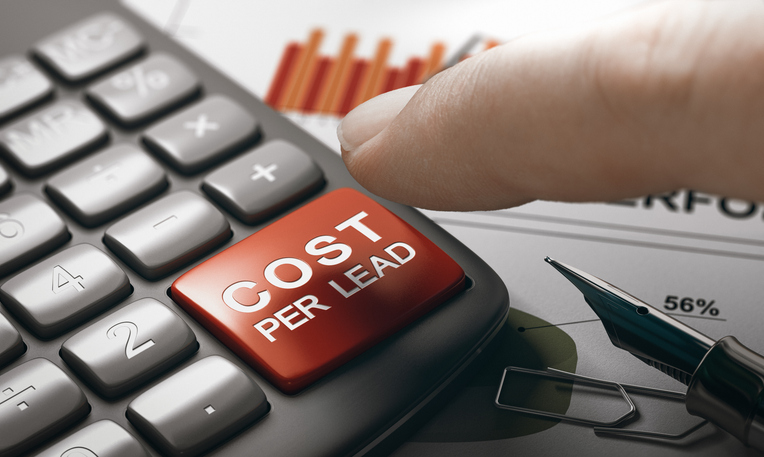
Cost per lead, often abbreviated to CPL, measures how much it costs to generate a single enquiry or prospect.
The calculation is straightforward. You divide your total marketing spend by the number of leads generated over a given period.
If you spend £1,000 on marketing and generate 100 enquiries, your cost per lead is £10.
The formula itself is simple. Understanding whether that figure is good or bad requires much deeper analysis.
Many businesses focus exclusively on reducing cost per lead without considering the quality of those leads. In reality, a higher cost per lead can often produce significantly better commercial results if the prospects are more likely to convert into customers.
This is why cost per lead should never be viewed in isolation.
What Is A Good Cost Per Lead In 2026?
A good cost per lead is one that allows your business to acquire profitable customers at a sustainable cost.
As a general rule, many businesses operate successfully when their lead generation costs represent approximately 10% to 20% of customer lifetime value. This creates sufficient margin to support sales activity, fulfilment and long-term profitability.
Across many B2B industries, a typical cost per lead often ranges between £70 and £200.
Within highly competitive sectors such as technology, software and enterprise services, costs can be significantly higher. It is not uncommon to see lead generation costs exceeding £500 or even £1,000 per lead.
That may sound expensive until you understand the value of the customer being acquired.
If a software business generates a £50,000 customer from a £1,000 lead, the economics remain highly attractive.
The cost alone is rarely the issue.
The return is what matters.
Why Does Cost Per Lead Vary So Much Between Industries?
Different industries operate with completely different buying journeys.
A local service provider may generate enquiries from consumers who are ready to make a purchasing decision immediately. A technology company may spend months educating prospects before a sales conversation even takes place.
The longer the buying journey, the more expensive lead generation tends to become.
Competition also plays a major role.
Industries with significant advertising activity often experience higher costs because businesses compete aggressively for the same audience. This drives up advertising costs, increases cost per click and ultimately influences cost per lead.
Market maturity, competition levels and customer value all contribute to the final figure.
This is why benchmarking against another industry often provides very little practical value.
Why Should Businesses Stop Obsessing Over Cost Per Lead?
Many business owners spend far too much time trying to reduce their cost per lead.
Whilst efficiency is important, reducing lead costs does not automatically increase profitability.
Consider two scenarios.
In the first, a business generates leads for £20 each, but only one in twenty becomes a customer.
In the second, a business generates leads for £100 each, but one in three becomes a customer.
The second business may appear less efficient at first glance. In reality, it could be significantly more profitable.
The quality of the lead often matters far more than the cost of the lead.
This is why sophisticated marketers focus on the entire acquisition process rather than a single metric.
How Does Cost Per Lead Connect To Customer Acquisition Cost?

Cost per lead is only one stage of the customer acquisition journey.
To understand the true effectiveness of marketing, businesses must also measure Customer Acquisition Cost, commonly known as CPA or CAC.
Customer acquisition cost measures the total investment required to generate a paying customer.
This is where conversion rates become critically important.
Imagine your business spends £1,000 on advertising.
The campaign generates 65 leads.
Your cost per lead is therefore:
£1,000 ÷ 65 = £15.38
If your sales team converts one in four leads into customers, those 65 leads generate approximately 16 customers.
Your customer acquisition cost becomes:
£1,000 ÷ 16 = £61.53
Suddenly, the conversation shifts.
Instead of discussing marketing spend, you begin discussing how much it costs to acquire customers.
That is a much more meaningful business metric.
Why Should You Track MQLs, SQLs And Deals?
Understanding your conversion journey is essential if you want accurate reporting.
Many businesses focus on lead volume without understanding what happens after a lead is generated. This creates a significant blind spot.
The most effective organisations track progression through each stage of the sales process.
Marketing Qualified Leads, often called MQLs, represent prospects who have demonstrated meaningful interest.
Sales Qualified Leads, or SQLs, represent prospects who are genuinely ready for a sales conversation.
The final stage is the conversion into a customer.
Tracking these stages allows businesses to understand precisely where opportunities are being won or lost.
A business generating large numbers of MQLs but very few SQLs may have a targeting issue. A business generating strong SQL numbers but weak customer conversion rates may have a sales issue.
The data tells the story.
Why Does Customer Lifetime Value Matter More Than CPL?
The most important number in marketing is often customer lifetime value.
Lifetime value measures the total revenue a customer generates throughout their relationship with your business. Without this figure, cost per lead becomes difficult to interpret.
Imagine a business generating leads at £200 each.
At first glance, this may appear expensive.
However, if each customer generates £25,000 of revenue over their lifetime, that lead cost suddenly becomes highly attractive.
The relationship between customer lifetime value and customer acquisition cost determines whether a business can scale profitably.
This is why experienced marketers always analyse these metrics together.
One without the other provides only half the picture.
How Does This Change The Way We Think About Marketing?
Understanding cost per lead and customer acquisition cost fundamentally changes how marketing is viewed within an organisation.
Many businesses still treat marketing as an expense.
They ask questions such as:
“How much are we spending?”
“What is the budget?”
“Can we reduce costs?”
The more powerful question is:
“How many customers can we acquire?”
Once you understand your acquisition economics, marketing becomes far more predictable.
If your average customer acquisition cost is £100 and your business wants 100 new customers, you can model the required investment with a reasonable degree of confidence.
Marketing stops being viewed as a cost centre.
It becomes an acquisition engine.
How Can Insight Owl Help Track Cost Per Lead?
Understanding cost per lead requires visibility across multiple marketing channels.
Businesses need to understand where leads originate, how traffic behaves and which channels generate the strongest results. This data often exists across several different platforms, making analysis time-consuming and complicated.
Insight Owl brings together data from Google Analytics, Google Search Console, SEMrush and proprietary reporting sources into a single reporting dashboard. Business owners can monitor website traffic, acquisition sources, search visibility, AI visibility and authority metrics without constantly switching between tools.
By understanding traffic sources alongside conversion data, businesses gain a much clearer picture of what is driving enquiries and which channels are delivering the strongest return on investment.
What Should Businesses Focus On First?
The best cost per lead is not necessarily the cheapest one.
The most successful businesses focus on generating profitable customers rather than cheap enquiries. They understand their conversion rates, know their customer lifetime value and can confidently calculate how much they are willing to spend to acquire a customer.
Once those numbers are understood, marketing becomes considerably easier to scale.
Is A Lower Cost Per Lead Always Better?
No. Lower-cost leads often convert at lower rates. Lead quality is frequently more important than lead quantity.
What Is More Important Than Cost Per Lead?
Customer acquisition cost and customer lifetime value provide a more complete picture of marketing performance and long-term profitability.
How Often Should I Measure Cost Per Lead?
Most businesses should review cost per lead monthly, alongside conversion rates and customer acquisition costs, to identify trends and opportunities for improvement.
If you want to understand exactly where your leads are coming from and how your marketing channels are performing, Insight Owl provides a complete reporting dashboard that combines traffic, search visibility, AI visibility and acquisition data into one easy-to-understand platform.
Simple pricing, serious output.